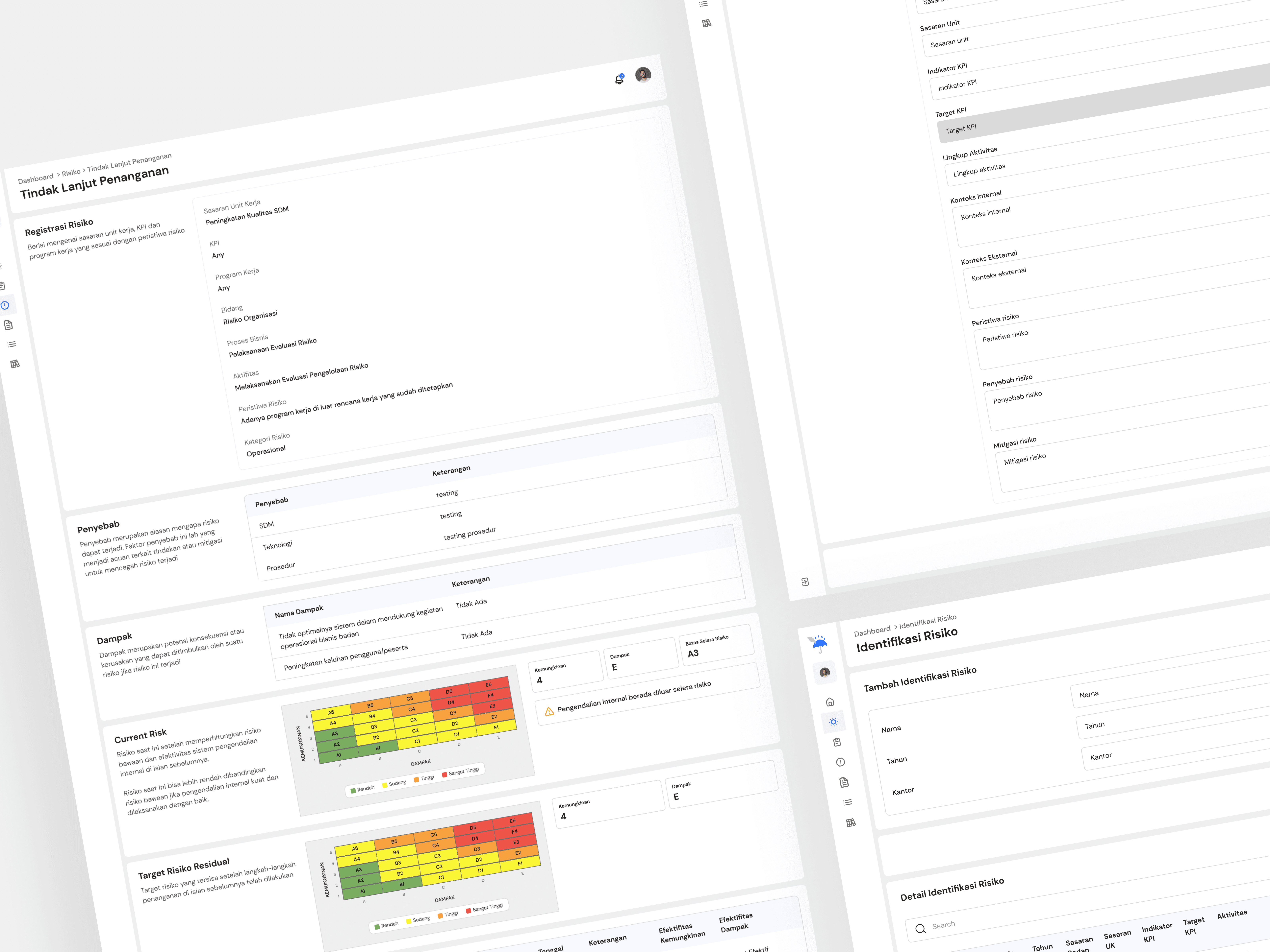
BPJS Ketenagakerjaan required a comprehensive redesign of their Corporate Risk Management System (SIMRK) to enhance usability and align with updated risk governance standards. The existing system was complex and not user-friendly, leading to inefficiencies in risk data input and monitoring.
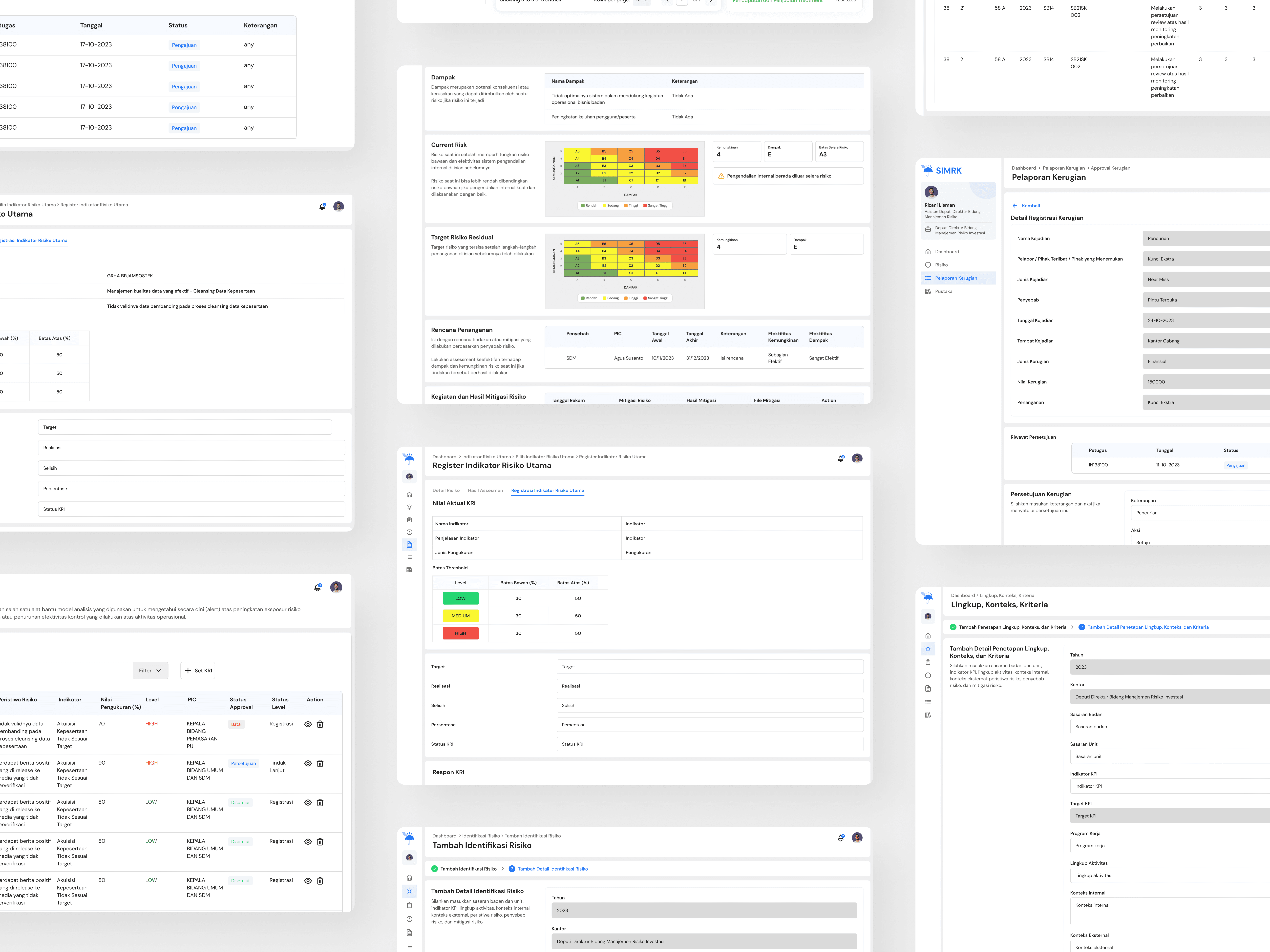
What is SIMRK?
In realizing reliable, sustainable and prosperous employment social security for all Indonesian workers, it is necessary:
Careful and good risk management
Implementation of monitoring to minimize the impact of risks.
Therefore, a system was created to manage risk called the Risk Management System (SIMRK). SIMRK is a system that helps users to manage risks carefully and well, and monitor in minimizing the impact of risks.
Why the redesign?
There are three main reasons why SIMRK should be redesigned, which are:
Difficult and repetitive data entry. Difficult and repetitive data entry means that users only use SIMRK for quarterly reporting purposes, not for proper risk reporting.
Technical language used is not familiar. There are several menu names in SIMRK that many users still do not know the purpose and function. Such as:
LEM (Lost Event Management) which is a menu for reporting or monitoring various kinds of risk events that occur in the work unit.
EWS (Earlly Warning System) which is a menu used as an early warning of increased risk exposure to an activity
Unattractive app display. No dashboard visualization that contains a summary of each unit's strategic goals, risk profile and key risks that must be considered.
What did I do?
This project has been done by the previous team. But not yet completed. Therefore, I was tasked to continue the SIMRK redesign process.
Studied the research results that had been done by the previous team. I did this to understand how the system works, who the users are and what should be changed in the redesign process. This helped me to take the next step in redesigning SIMRK.
Redesigning SIMRK according to the system design that has been made before. Since the design system already exists, I continued the redesign based on the existing design system. I also held discussions with the developer to discuss the flow and implementation of the design that I had made.
Make a prototype based on the design that has been made. To make it easier for developers to implement this design, I also created a prototype to show the flow of using the new SIMRK.
Outcome
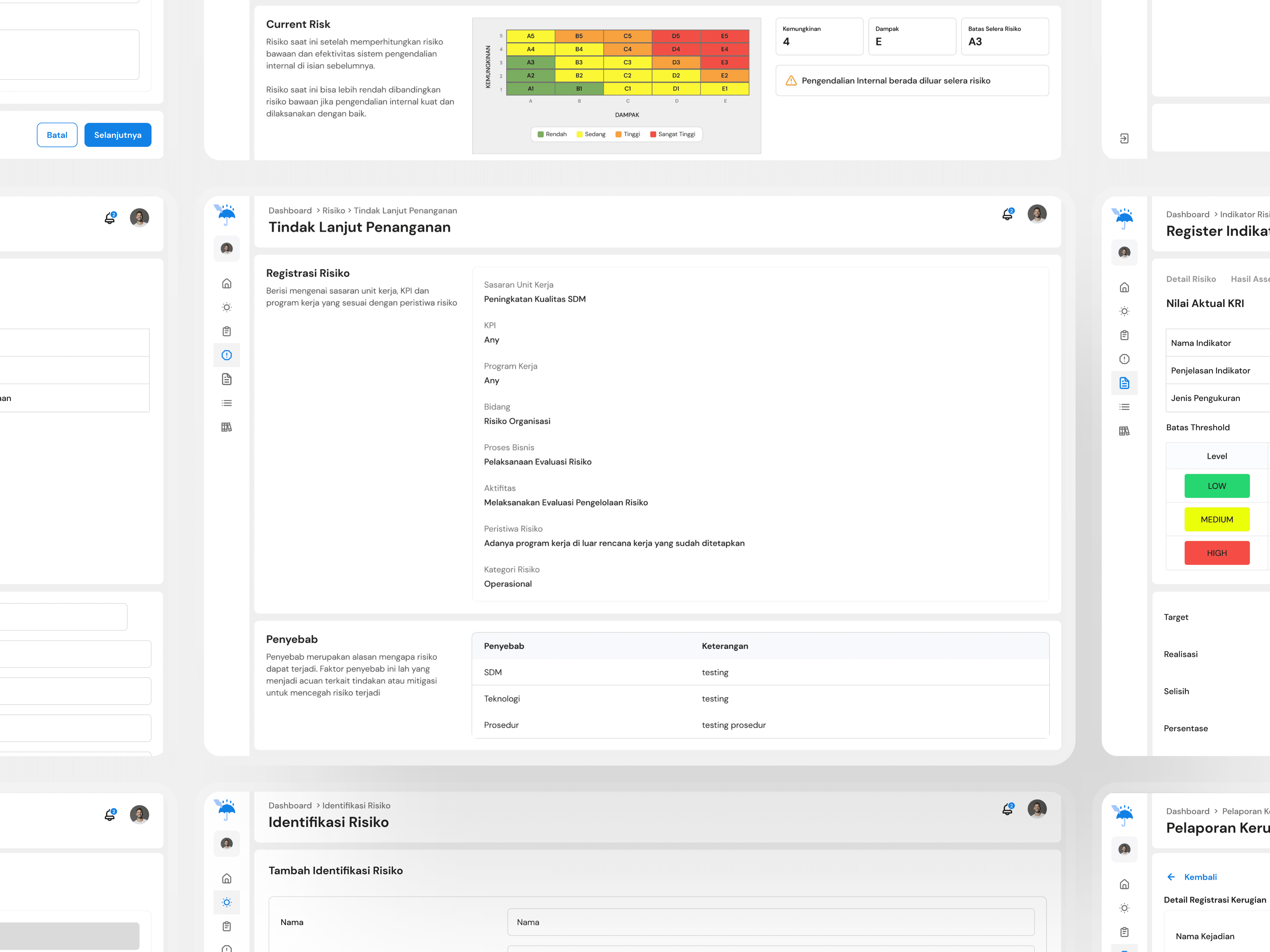
As of December 20, 2023, 80% of my design has been implemented in the new SIMRK system. The redesigned SIMRK system led to:
Improved user satisfaction due to a more intuitive interface.
Increased efficiency in risk data management and reporting.
Enhanced compliance with risk governance standards.